
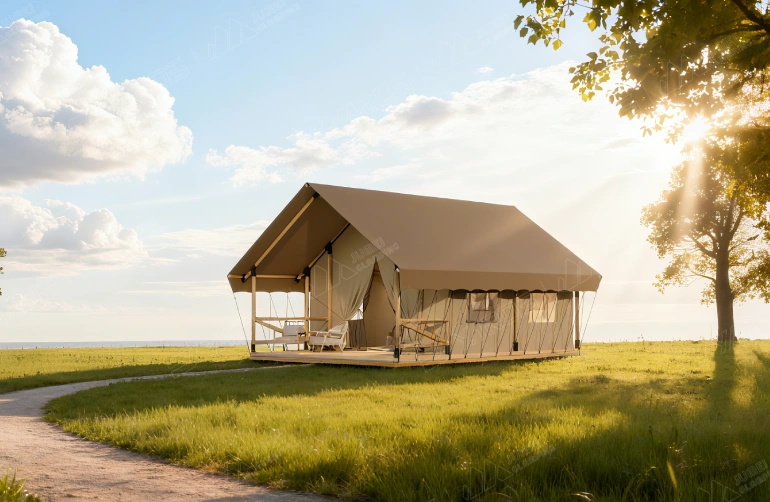
As luxury outdoor tourism continues to rise, more hotels and resorts are choosing safari tents to upgrade their accommodation offerings. These structures combine natural aesthetics with modern comfort, allowing properties to create unique guest experiences with faster construction and lower investment than traditional buildings. However, before you buy safari tent solutions for a hospitality project, several key factors must be evaluated to ensure long-term performance, operational efficiency, and guest satisfaction. Below, Jumei shares some things to keep in mind when purchasing tents.
1. Clarify Your Project Needs and Usage Scenarios
Before making any investment, hotels and resorts should define how the safari tent will be used:
- Accommodation units or public spaces (rooms, suites, restaurants, lounges)
- Short-term seasonal use or long-term operation
- Expected lifespan requirements
- Local climate conditions—wind, humidity, temperature, UV exposure
Clear planning helps you select the right tent size, layout, materials, and structural configuration.
2. Evaluate Material Durability and Weather Resistance
High-quality materials ensure safety and longevity—critical for hospitality environments. When you buy safari tents, focus on:
Roof and Wall Fabrics
- Heavy-duty PVC or polycotton canvas
- UV-resistant, mildew-resistant, and 100% waterproof
- Flame-retardant certifications such as CPAI-84, NFPA 701, or local safety standards
Structural Frame
- Galvanized steel or treated solid wood to resist corrosion
- Reinforced connectors and tension systems for strong wind performance
These features help the tent maintain stability in different climates, from coastal humidity to desert heat.
3. Consider Insulation and Thermal Comfort
For hotels and resorts, guest comfort is everything. Safari tents should provide adaptable performance for both hot and cold seasons:
- Optional double-layer roofs for better heat mitigation
- Insulation layers or thermal barriers in roofing and walls
- Space for air conditioning, heating systems, and ventilation fans
- High-density flooring systems that prevent moisture from rising
Good insulation ensures lower energy costs and more consistent room comfort throughout the year.
4. Review Customization Options
Different resorts have different design goals. The ability to customize is essential when you buy safari tents:
- Flexible floor plans (single-bed, family suites, multi-room layouts)
- Choice of sidewalls: canvas, PVC, or glass
- Balconies, decks, and outdoor lounges
- Interior bathroom integration (plumbing routes, waterproofing, ventilation)
- Branding options with color palettes and exterior styles
Customization allows the tent to match the resort’s architecture, landscape, and experience positioning.
5. Check Compliance and Safety Standards
A safari tent used for commercial hospitality must meet local building and safety requirements:
- Fire safety certifications
- Wind load and structural testing
- Environmental compliance (eco-friendly materials, local regulations)
- Proper electrical and plumbing systems for accommodation
Ensuring compliance avoids operational risks and improves guest trust.
6. Understand Installation and Maintenance Requirements
Safari tents are quicker to install than conventional buildings—but professional assembly is still crucial:
- Does the supplier provide on-site installation guidance or full installation service?
- Are parts modular and easy to replace?
- What routine maintenance is recommended for fabric, frame, and flooring?
- Is the structure designed for relocation or expansion?
Efficient installation and low maintenance directly reduce operating costs.
7. Evaluate the Supplier’s Expertise and After-Sales Support
When purchasing for a resort or hotel, choosing the right supplier is just as important as choosing the right tent.
Look for suppliers that have:
- Proven experience with hotel, resort, and eco-tourism projects
- Real case studies across different climates
- Transparent quality assurance and warranty terms
- Responsive after-sales support and spare parts availability
Working with a reliable safari tent manufacturer ensures smooth construction and long-term operational stability.
Conclusion
When you buy safari tent products for a hotel or resort, it’s essential to look beyond appearance and focus on structural integrity, weather resistance, guest comfort, and professional supplier support. With careful planning and the right manufacturer partnership, safari tents can significantly enhance a property’s brand value and expand its outdoor accommodation capacity.