
The demand for glamping hotel tents is rising rapidly as travelers seek luxury accommodation combined with natural experiences. For investors and resort developers, choosing the right location is one of the most critical factors affecting occupancy rates, pricing power, and long-term returns. A well-selected site can significantly enhance the commercial value of a glamping hotel tent project.
Scenic Natural Destinations
Mountains and highland areas
Mountain locations offer fresh air, panoramic views, and a sense of escape. Glamping hotel tents in mountain regions attract travelers looking for relaxation, hiking, and wellness experiences. Proper site selection should consider wind conditions, drainage, and accessibility.
Lakesides and riversides
Waterfront locations are highly attractive for glamping hotel tents. Views of lakes or rivers enhance guest experience and allow for premium pricing. Elevated platforms and proper water management are essential to protect tents from moisture.
Forests and nature reserves
Forested areas provide shade, privacy, and strong eco-tourism appeal. Glamping hotel tents blend naturally into woodland environments and attract guests interested in nature retreats, yoga camps, and family vacations.
Special and Experiential Locations
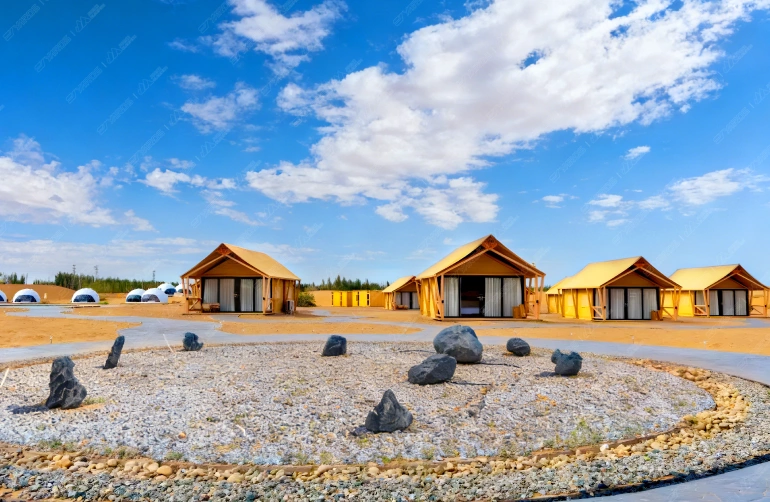
Deserts and grasslands
Open landscapes such as deserts and grasslands are ideal for experiential tourism. Glamping hotel tents in these areas appeal to stargazers, photographers, and adventure travelers. Site planning should focus on wind resistance, temperature control, and sand protection.
Coastal and island destinations
Beach and island locations are popular for high-end glamping hotels. Ocean views and vacation demand support strong occupancy, but investors should consider corrosion resistance, wind load, and local regulations.
Accessibility and Infrastructure Considerations
A successful glamping hotel tent site should balance natural beauty with accessibility. Locations within reasonable driving distance of major cities, airports, or tourist routes tend to perform better commercially. Availability of utilities such as water, electricity, and internet also affects operational efficiency.
Local Policies and Tourism Support
Before finalizing a site, investors should review local land-use policies, tourism development plans, and environmental regulations. Regions that actively support eco-tourism and sustainable development often provide incentives and long-term stability for glamping projects.
Climate and Seasonal Operation
Understanding local climate conditions helps determine whether the glamping hotel tent can operate year-round or seasonally. Mild climates allow longer operating seasons, improving return on investment.
Conclusion
Choosing the right location is key to the success of a glamping hotel tent investment. Scenic environments, experiential destinations, good accessibility, and supportive local policies all contribute to higher occupancy and stronger returns. With careful site selection and proper planning, glamping hotel tents can become a profitable and sustainable hospitality investment.