
When researching luxury safari tents price, many resort investors focus only on the purchase cost of the tent itself. In reality, a successful safari tent resort requires a broader budget plan that includes multiple categories of expenses beyond the tent structure.
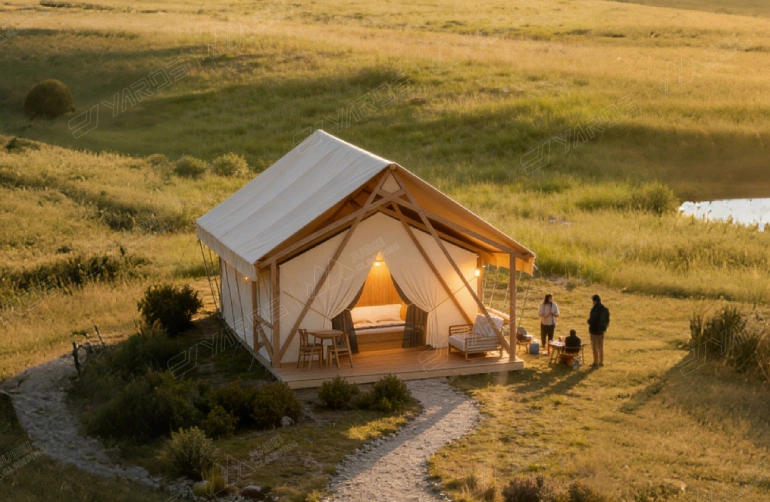
The first and most visible cost is the luxury safari tent unit price. This varies based on tent size, frame material, canvas quality, insulation level, window design, and interior configuration. Premium models with reinforced structures, thermal liners, panoramic windows, and private bathrooms naturally sit at a higher price point but also support higher nightly rates.
Site preparation is another major expense. Even though safari tents require less groundwork than permanent buildings, resorts still need to budget for foundations or platforms, leveling, drainage systems, and access paths. The complexity of the terrain directly affects these costs.
Utility infrastructure adds to overall investment. Electricity, water supply, sewage systems, internet connectivity, and lighting installations are essential for guest comfort. Remote locations may require solar power systems or water storage tanks, increasing initial spending.
Interior furnishings and amenities also represent a significant portion of the budget. Beds, sofas, flooring, lighting fixtures, air conditioning or heating units, bathroom fittings, and decorative elements all contribute to creating a luxury guest experience.
Logistics and installation should not be overlooked. Shipping costs vary based on distance and tent volume, while on-site assembly may require professional installation teams. Difficult-to-access locations often lead to higher transportation and labor costs.
Operational and regulatory costs are also part of the investment picture. These include permits, insurance, safety compliance, staff training, marketing, and booking platform fees. While not directly related to tent pricing, they are critical for long-term resort operation.
Conclusion
Understanding luxury safari tents price requires looking beyond the product itself and considering total resort investment costs. By planning for tent units, site preparation, utilities, furnishings, logistics, and operational expenses, investors can build a realistic budget and maximize long-term profitability.