
When exploring Glamping Safari Tent for Sale, one of the most important considerations is how well the tent matches the environment. Different locations require different structural features, materials, and designs to ensure comfort, durability, and long-term performance.
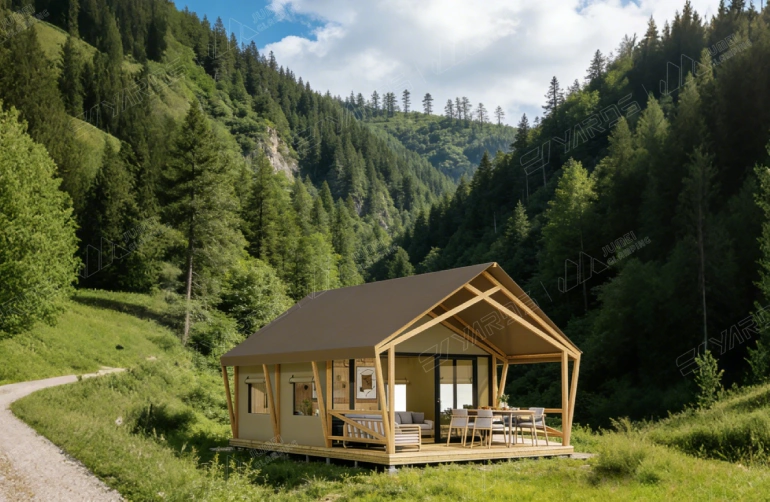
In forest and woodland areas, safari tents should focus on moisture resistance and ventilation. High humidity and shade require breathable canvas materials and elevated flooring to prevent dampness. Tents with good airflow help maintain a comfortable indoor environment.
For mountain and high-altitude regions, weather resistance becomes essential. Strong winds and lower temperatures mean that tents should have reinforced frames, stable anchoring systems, and proper insulation. Durable structures ensure safety while maintaining warmth inside the tent.
In coastal and beachfront environments, corrosion resistance is a key factor. Materials such as aluminum frames and treated fabrics are ideal for resisting salt air and humidity. Good ventilation is also important to handle sea breezes and prevent condensation.
Desert environments require tents that can handle intense sunlight and temperature fluctuations. UV-resistant fabrics, heat-reflective materials, and open ventilation designs help reduce heat buildup during the day while maintaining comfort at night.
For grasslands and open plains, flexibility and layout design are important. These areas often allow for larger resort setups, so tents with modular designs and customizable layouts can maximize space and create a visually appealing environment.
Another consideration is rainy or tropical climates, where waterproof performance is critical. Safari tents used in these areas should include strong drainage systems, sloped roofs, and high-quality waterproof coatings to ensure a dry and comfortable interior.
Ultimately, selecting the right tent depends on understanding the environmental conditions and matching them with appropriate features. Buyers looking for Glamping Safari Tent for Sale should evaluate climate, terrain, and long-term usage to ensure the best results.
By choosing the right tent for the right environment, developers and investors can create comfortable, durable, and attractive glamping spaces that enhance guest experience and improve project success.