
Stretch tents have become a popular solution for outdoor events, hospitality businesses, restaurants, and tourism projects. Their flexible shapes, modern appearance, and adaptable installation methods make them suitable for many different environments. However, when comparing Stretch Tents Prices, buyers should first understand the product’s positioning, target market, and intended application. Choosing the right configuration is more important than simply purchasing the cheapest option.
Understanding the Product Positioning of Stretch Tents
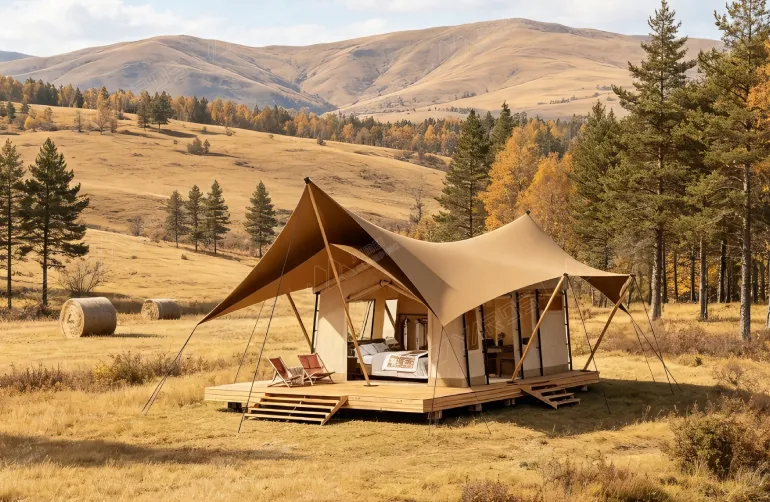
Unlike traditional fixed-shape tents, stretch tents feature flexible fabric structures that can be installed in different configurations. Their adaptable designs allow them to create shaded outdoor spaces while maintaining an attractive and distinctive appearance.
For restaurants and cafes, stretch tents can provide additional dining areas and comfortable outdoor seating. Event organizers often use them for weddings, festivals, exhibitions, and private celebrations. In resorts and hotels, they can serve as outdoor lounges, reception areas, dining spaces, or recreational shelters.
Different applications require different product specifications. A temporary event shelter may prioritize portability and quick installation, while a resort installation may require more durable materials and a customized structural design.
What Determines Stretch Tents Prices?
The cost of a stretch tent depends on several factors, including size, fabric quality, structural components, and customization.
Smaller models are generally suitable for private gardens, small restaurants, and compact outdoor spaces. Medium-sized tents can accommodate dining areas or small events, while larger configurations are often selected for commercial venues and hospitality projects.
Fabric specifications also influence the price. Buyers should compare waterproof performance, UV resistance, tensile strength, color durability, and fire-retardant properties where required. Supporting poles, ropes, connectors, and fixing accessories should also be included when evaluating quotations.
When comparing Stretch Tents Prices, it is important to confirm whether the quotation covers only the fabric or a complete package with supporting structures and installation accessories.
Identify the Right Target Customers
Stretch tents serve several customer groups with different purchasing priorities.
Event companies and wedding planners usually need flexible designs, attractive appearances, and convenient transportation. They may purchase multiple tents for repeated use across different venues.
Restaurants, cafes, and hotels often prioritize durability, weather protection, and visual consistency with their business environment. A well-designed outdoor shelter can increase usable seating capacity and improve the customer experience.
Resort developers and tourism investors may require larger customized structures for dining, entertainment, and public activity areas. Their decisions usually consider long-term performance, maintenance costs, and overall project design.
Understanding these customer groups helps suppliers recommend suitable products rather than offering the same configuration to every buyer.
How to Choose the Right Price Positioning
A suitable purchasing budget should reflect the product’s intended use and expected service life. Entry-level configurations may work for occasional private use, while commercial applications often justify investing in better fabric, stronger structural components, and professional installation support.
Buyers should also consider shipping, local installation, maintenance, and replacement costs. A lower initial quotation does not always represent better long-term value.
Ultimately, Stretch Tents Prices should be evaluated alongside product quality, application requirements, and supplier reliability.
Finding the Right Balance
The best stretch tent is not necessarily the largest or most expensive model. It is the one that matches the customer’s needs, budget, and operating environment. By understanding product positioning, pricing factors, and target customers, buyers can make more informed purchasing decisions and choose a solution that delivers practical value over time.