
Developing an outdoor resort in a natural landscape can be an exciting investment, but it also brings practical challenges. A beachfront campsite, a mountain retreat, and a desert resort all have different environmental conditions. Standard tent products may not always fit the available space or provide the performance required for long-term operation.
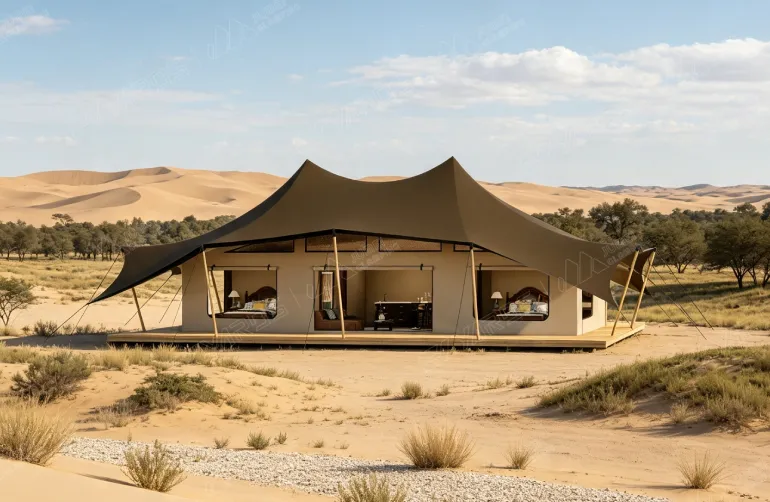
This is where Custom Glamping Tents offer greater flexibility. By adjusting structural designs, materials, dimensions, and functional layouts, resort developers can create accommodation that better matches the characteristics of their project sites.
Overcoming Challenges of Uneven Terrain
Not every resort has a flat and open construction area. Mountain slopes, rocky ground, forest clearings, and lakeside sites can make installation more complicated.
Customized tent dimensions and platform designs allow manufacturers to consider the actual shape and elevation of the land. Adjustable support solutions and suitable anchoring systems can help accommodate certain uneven surfaces, subject to professional site assessment.
For projects with limited available space, custom layouts can also make better use of the land. Instead of changing the entire landscape to fit a standard product, developers can select a configuration that works with the existing environment.
Choosing Materials for Different Climates
Environmental conditions have a direct impact on tent performance. In coastal areas, salt air and high humidity can accelerate corrosion, making corrosion-resistant structural materials and suitable surface treatments important.
Desert destinations often experience strong sunlight and significant temperature changes between day and night. UV-resistant fabrics, effective ventilation, and shading structures can improve indoor comfort.
In tropical regions with frequent rainfall, waterproof fabrics, sealed connections, and proper drainage should be carefully considered. For colder destinations, insulation options and enclosed structural designs can help create a more comfortable indoor environment.
When ordering Custom Glamping Tents, buyers should discuss local climate conditions with the manufacturer rather than selecting materials based only on appearance or price.
Creating Designs That Match the Surroundings
A successful glamping resort should offer more than basic accommodation. Its design should complement the natural landscape and create a memorable experience for guests.
Large panoramic windows can help mountain resorts showcase scenic views, while spacious verandas are suitable for beachfront accommodation. Forest retreats may benefit from private outdoor decks, and open-plan interiors can create a closer connection with nature.
Customization also allows investors to choose different tent shapes, sizes, colors, entrance positions, and interior arrangements. Bathrooms, storage areas, and separate sleeping spaces can be incorporated according to the project’s positioning and target customers.
These design options make Custom Glamping Tents suitable for a wider range of hospitality concepts, from luxury retreats to family camping resorts.
Improving Installation and Project Efficiency
Another advantage of customization is the opportunity to plan installation before production begins. By sharing site measurements, ground conditions, climate information, and project drawings, buyers allow manufacturers to evaluate potential challenges in advance.
This can help identify suitable foundation methods, transportation requirements, assembly procedures, and structural adjustments. It may also reduce unnecessary modifications during installation.
However, customized products still require professional engineering review. Wind exposure, soil stability, local regulations, and drainage conditions should all be evaluated before construction.
Find the Right Manufacturer for Your Project
The value of customization depends heavily on the manufacturer’s technical capabilities. Look for a supplier that can provide detailed drawings, material specifications, structural recommendations, and installation guidance.
An experienced manufacturer should be willing to understand your site conditions before recommending a product. Clear communication during the design and production stages helps ensure that the final solution meets both functional and aesthetic requirements.
Ultimately, Custom Glamping Tents give resort developers more freedom to build in diverse natural environments. By matching the product to the terrain, climate, and business concept, investors can create distinctive outdoor accommodation with better site adaptability and a more comfortable guest experience.