
Stretch tents are widely used for outdoor events, restaurants, resorts, weddings, and temporary commercial spaces. Their flexible shapes and modern appearance make them suitable for different outdoor applications. However, not all products offer the same level of durability and performance. Before deciding which Stretch Tent to Buy, buyers should carefully evaluate the materials, structural design, workmanship, and supplier capabilities.
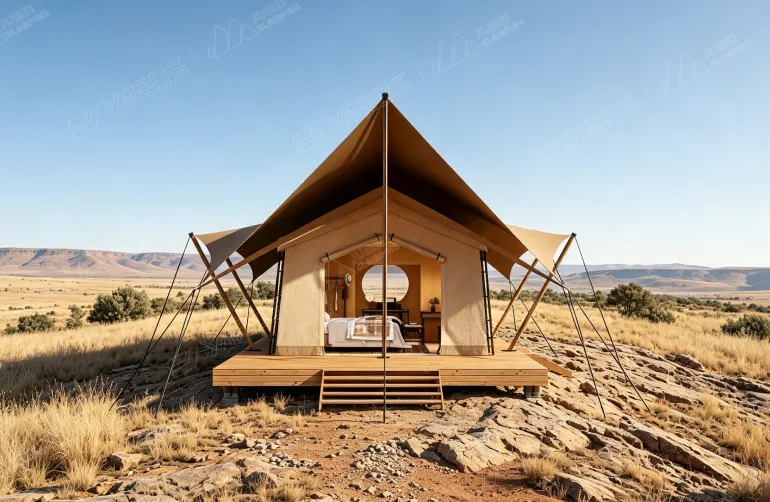
Check the Fabric Material and Performance
Fabric quality is one of the most important factors affecting the service life of a stretch tent. Buyers should first understand the fabric composition, thickness, weight, and treatment process. High-quality stretch fabric should offer suitable elasticity while maintaining its shape after repeated installation and use.
Waterproof performance is equally important. Ask the supplier whether the fabric has undergone waterproof treatment and whether it can withstand the rainfall conditions expected at your project location. UV resistance should also be considered, especially for tents used in tropical or high-sunlight environments.
Do not judge fabric quality by appearance alone. Request technical specifications, material samples, and relevant test reports whenever possible.
Examine Seams and Manufacturing Details
Even good fabric can perform poorly if the manufacturing process is unreliable. Carefully inspect the stitching around fabric panels, corners, and connection points. These areas often experience greater tension during installation and operation.
Look for neat, consistent stitching without loose threads or visible gaps. Reinforced edges and properly designed attachment points can help distribute tension more evenly and reduce the risk of tearing.
When evaluating a Stretch Tent to Buy, ask the manufacturer how seams are processed and whether the product has undergone quality inspections before shipment.
Evaluate Poles, Anchors, and Accessories
The supporting system is another essential part of product quality. Poles should have suitable strength, stable connections, and appropriate surface treatment for the intended environment. Wooden and metal poles offer different appearances and maintenance requirements.
Anchoring accessories, ropes, tensioning components, and ground fixings should also be checked. Their specifications need to match the tent size, installation surface, and expected weather conditions.
A reliable supplier should provide clear installation instructions and explain how to tension the fabric correctly. Proper installation is essential for both safety and long-term performance.
Match the Product to Your Application
Different projects require different stretch tent configurations. A restaurant terrace may prioritize appearance and shade, while an event venue may need larger coverage and flexible layouts. Coastal locations may require additional attention to corrosion resistance, while windy areas need carefully planned anchoring systems.
Before choosing a Stretch Tent to Buy, confirm the required dimensions, fabric color, pole arrangement, installation method, and local environmental conditions. This helps avoid purchasing a product that looks suitable but cannot meet actual operating requirements.
Choose a Reliable Manufacturer
Product quality also depends on the manufacturer’s production experience and quality control process. Ask for project photographs, material specifications, customization options, warranty terms, and after-sales support.
Jumei Glamping provides stretch tent solutions for different outdoor applications. When comparing suppliers, buyers should focus on transparent product information and practical manufacturing capabilities rather than price alone.
Ultimately, selecting the right Stretch Tent to Buy requires checking both the product itself and the supplier behind it. Careful evaluation before purchasing can reduce maintenance problems, improve outdoor performance, and provide better long-term value.