
As the glamping industry continues to expand, Dome House Glamping has become one of the most recognizable and popular accommodation styles. Known for its modern appearance and immersive experience, dome housing is available in several types, mainly differentiated by materials and structural design.
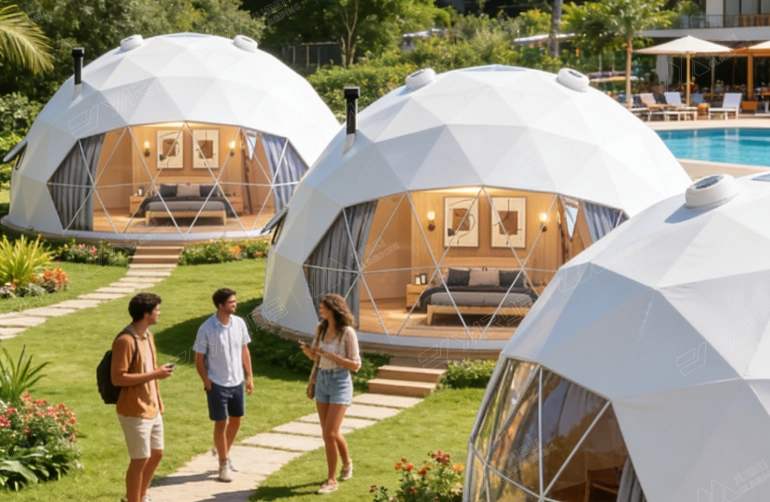
One of the most common types is the PVC membrane dome. These domes use high-performance PVC fabric combined with a metal frame, offering strong waterproofing, UV resistance, and durability. They are widely used in glamping resorts due to their balance of cost, performance, and ease of installation.
Another popular option is the glass dome structure. Made with tempered or laminated glass panels, these domes provide a premium experience with maximum transparency. They allow guests to enjoy panoramic views and natural light, making them ideal for high-end projects, although they typically come with higher costs and stricter installation requirements.
The polycarbonate (PC) dome is another type found in the market. Using lightweight yet durable panels, PC domes offer good impact resistance and insulation performance. They are often used in environments where both strength and thermal efficiency are important.
Some projects also adopt ETFE membrane domes, which use advanced fluorine-based materials. ETFE is known for its lightweight properties, high transparency, and excellent weather resistance. This type is often seen in innovative or large-scale architectural applications.
In addition to material differences, domes can vary in frame structure, such as steel or aluminum frameworks. Steel frames provide higher strength and are suitable for more demanding environments, while aluminum offers lighter weight and easier installation.
Each type of dome house serves different needs depending on budget, climate, and project positioning. PVC domes are typically the most cost-effective and widely used, while glass and ETFE domes cater to premium or specialized projects.
Overall, Dome House Glamping offers a range of material options that allow developers to choose the most suitable solution for their project. By understanding these different types, investors can better match product selection with market demand and environmental conditions.