
In recent years, the Outdoor Glamping Dome has become one of the fastest-growing accommodation concepts in the tourism market. Combining outdoor living with modern comfort, glamping dome hotels are increasingly viewed as a new and innovative direction within the cultural and tourism industry.
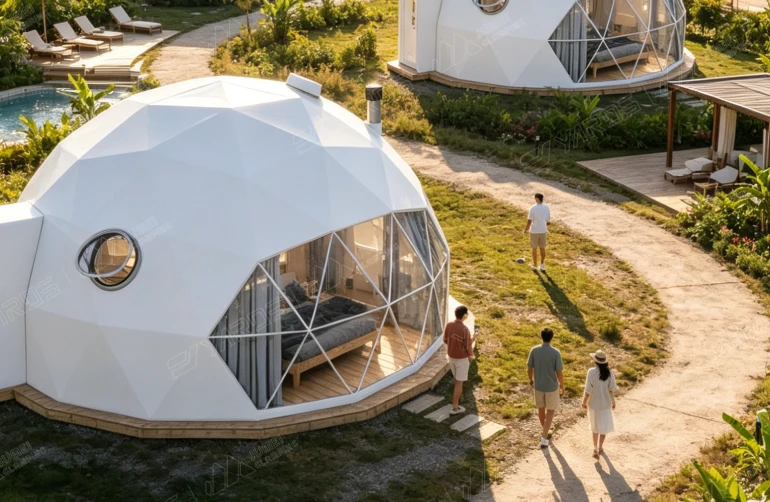
One of the main reasons for this growth is the changing preference of modern travelers. Traditional sightseeing tourism is gradually shifting toward experience-based travel, where guests seek deeper emotional connections with nature, local culture, and unique accommodation experiences.
Outdoor glamping domes meet this demand by offering a balance between comfort and immersion in nature. Unlike conventional hotels, dome accommodations allow guests to enjoy scenic environments such as forests, mountains, deserts, and lakesides while still maintaining hotel-style convenience.
The visual appeal of glamping domes has also contributed to their popularity. Their modern geometric structures and panoramic designs create highly recognizable destinations that attract attention on social media and travel platforms. This has made glamping resorts especially popular among younger travelers and lifestyle-focused consumers.
From an industry perspective, outdoor glamping dome projects provide strong flexibility for tourism development. Compared to traditional hotel construction, prefab dome structures often require shorter construction cycles and simpler site preparation, making them more suitable for emerging tourism destinations.
Another important factor is the rise of eco-tourism and sustainable travel. Outdoor glamping domes generally create less environmental disruption than large permanent buildings, which aligns with the growing global emphasis on sustainable tourism development.
For investors and tourism operators, glamping dome hotels offer new business opportunities. Their unique accommodation style allows resorts to create premium experiences, improve destination branding, and attract guests seeking non-traditional travel experiences.
The scalability of dome projects further supports market growth. Operators can begin with smaller developments and expand gradually based on occupancy and tourism demand, reducing investment pressure and improving operational flexibility.
Outdoor glamping dome resorts also support the integration of culture, leisure, wellness, and outdoor activities, creating more diversified tourism experiences. This helps strengthen their role within the broader cultural tourism economy.
Overall, the Outdoor Glamping Dome represents a new direction for modern hospitality and tourism development. With its combination of efficient construction, visual appeal, sustainability, and experience-driven accommodation, it is becoming an increasingly important part of the emerging cultural and tourism industry.