
Custom glamping tents have become a preferred solution for resorts, eco-lodges, and private retreats seeking a unique visual identity and enhanced guest experience. When investors plan a custom design, understanding the cost structure is essential for budgeting and long-term project planning. The total project expense is mainly influenced by the tent’s design complexity, material selection, production requirements.
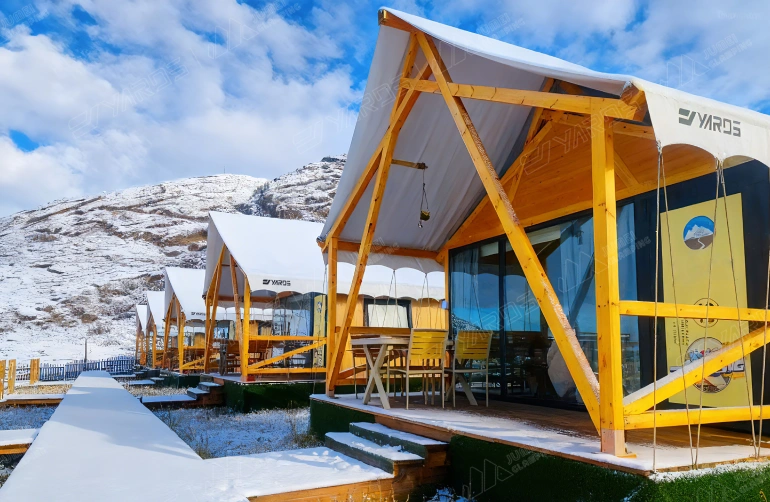
Key Factors That Influence Custom Glamping Tent Costs
Design customization
The more unique the architectural style, the higher the cost. Non-standard shapes, curved steel structures, oversized windows, and integrated wooden decks increase both engineering and labor requirements. Detailed 3D modeling and structural calculations also contribute to higher design fees.
Material specifications
Premium materials significantly affect pricing. High-grade galvanized steel or aluminum, thicker insulation layers, double-coated PVC membranes, tempered glass panels, and luxury interior finishes all raise production costs. Fire-retardant fabrics and climate-specific upgrades—such as snow-load reinforcements or UV-resistant coatings—add to the budget as well.
Size and functional layout
Larger tents naturally require more framework, membranes, and accessories. Adding private bathrooms, kitchens, skylights, or integrated HVAC openings increases the complexity and the cost of fabrication.
Brand requirements and custom branding
Many resorts require branded color schemes, customized logo printing, or exclusive design elements. These personalized aesthetic features require additional production steps, influencing final pricing.
Installation considerations
If the project needs a specialized installation team or reinforced foundations, the overall cost rises. Remote site locations or challenging terrains may also affect installation planning and expenses.
Conclusion
The cost of custom glamping tents depends on design choices, material specifications, structural requirements, and the scale of customization. Shipping fees vary according to container space, destination country, freight method, and local customs policies. By understanding these factors in advance, investors can plan budgets more accurately and optimize both production and logistics to achieve the best return on investment.