
When exploring Permanent Glamping Tents for Sale, understanding how pricing is determined is essential for investors, resort developers, and hospitality operators. Unlike temporary camping shelters, permanent glamping tents are designed for long-term use, and their pricing reflects durability, comfort, and structural performance.
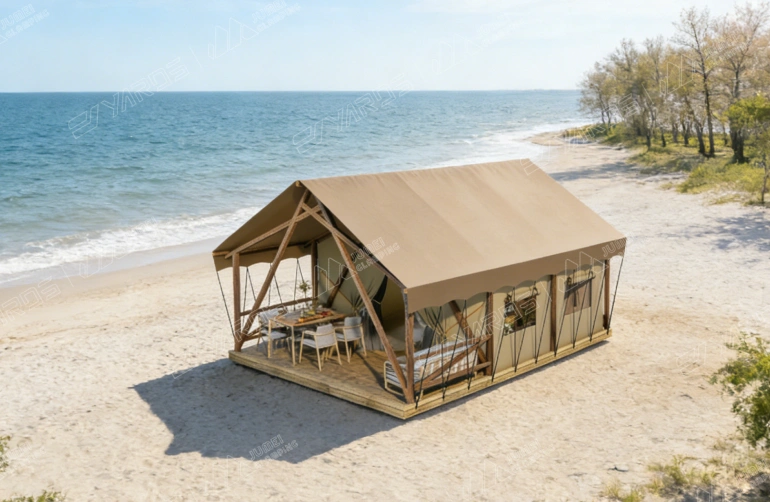
Material quality plays a major role in pricing. High-grade fabrics, reinforced frames, and corrosion-resistant components increase production costs but ensure long-term stability in outdoor environments. Tents built with premium materials typically offer better weather resistance and lower maintenance expenses over time, making them a more cost-effective investment in the long run.
Structural design also influences the overall price. Permanent glamping tents often feature stronger foundations, enhanced insulation, and wind-load resistance to meet resort-level standards. These design elements improve safety and comfort while increasing manufacturing complexity, which is reflected in the final cost.
Interior configuration is another important pricing factor. The inclusion of bathrooms, insulation layers, flooring systems, and utility connections adds value and functionality to the tent. Well-designed interiors allow operators to charge higher nightly rates, helping offset the initial investment.
Customization options further affect pricing. Size adjustments, layout modifications, fabric colors, and branding elements can all raise costs but provide a more distinctive guest experience. For resorts aiming to stand out in competitive markets, customization often justifies the additional expense.
Installation and site conditions also impact pricing. Terrain type, climate, and local regulations may require specific anchoring systems or structural enhancements. Permanent glamping tents designed for challenging environments typically involve higher upfront costs but deliver greater reliability and longevity.
In conclusion, pricing for Permanent Glamping Tents for Sale is shaped by a combination of material quality, structural design, interior features, customization, and site requirements. Understanding these cost factors helps investors make informed decisions and select solutions that balance upfront spending with long-term operational value.