
As demand for high-end outdoor accommodation continues to grow, luxury safari tents for sale have become a key product for resorts, eco-lodges, and tourism investors worldwide. From a manufacturer’s perspective, pricing is not just a number—it reflects structural safety, material quality, lifespan, and long-term return on investment. Understanding how safari tent prices are formed helps investors make confident and informed purchasing decisions.
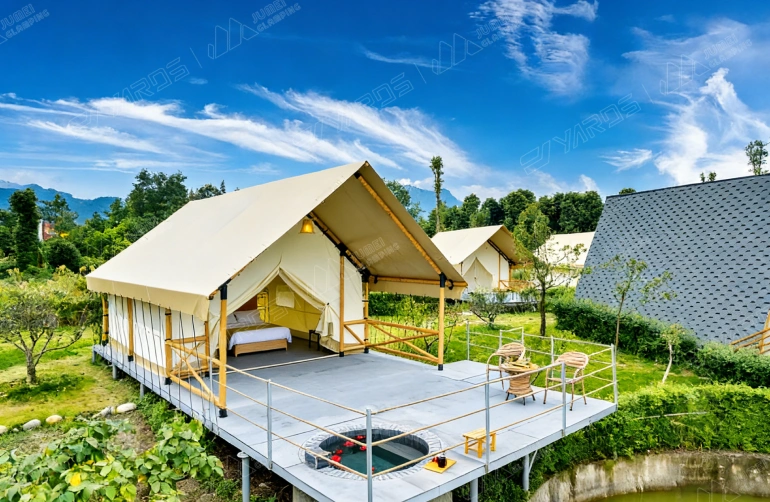
How Luxury Safari Tent Prices Are Determined
Structure and engineering standards
Luxury safari tents are designed as semi-permanent structures. Pricing is influenced by steel frame thickness, wind and snow load design, and overall structural stability. Stronger engineering means higher safety, longer service life, and lower maintenance costs over time.
Material quality and durability
High-end safari tents use premium materials such as galvanized or powder-coated steel, heavy-duty PVC roofing, and fire-retardant canvas walls. These materials cost more upfront but significantly reduce replacement and repair expenses during operation.
Tent size and interior layout
Larger tents with separate bedrooms, bathrooms, and living areas naturally cost more due to increased material usage and fabrication complexity. However, larger units allow higher nightly rates, improving overall revenue potential.
Customization level
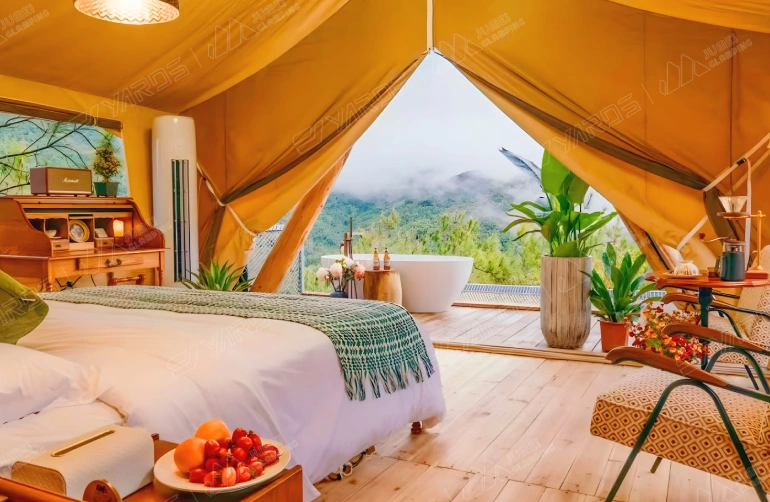
Customized designs—such as branded colors, special windows, insulation layers, or climate-specific upgrades—affect pricing. Customization allows investors to differentiate their resort and position it in a higher market segment.
Focus on long-term value, not just initial cost
As a manufacturer, the key message is value over time. A well-built luxury safari tent typically lasts many years with proper maintenance. Lower-priced tents often lead to frequent repairs, downtime, and higher operational costs.
Demonstrate return on investment (ROI)
Luxury safari tents support premium pricing in the hospitality market. Their visual appeal, comfort, and uniqueness attract high-spending guests, allowing faster cost recovery and higher profit margins.
Highlight faster project launch
Compared with traditional hotel construction, safari tents require less groundwork and shorter installation time. This allows investors to open earlier and generate revenue sooner.
Show flexibility and scalability
Manufacturers can offer modular production, enabling investors to start with a small number of tents and expand as demand grows. This reduces financial risk and supports phased investment strategies.
Provide professional support and reliability
A trustworthy manufacturer offers design support, production consistency, installation guidance, and after-sales service. This reduces uncertainty and gives investors confidence in the project’s long-term stability.
Conclusion
When evaluating luxury safari tents for sale, price should be viewed as an investment in safety, durability, and long-term profitability. From a manufacturer’s standpoint, a competitively priced yet well-engineered safari tent offers investors faster deployment, premium market positioning, and strong returns. Choosing the right manufacturer and product quality is the key to turning a safari tent purchase into a successful hospitality business.