
As outdoor tourism continues to grow, Geodesic Dome Glamping structures have become a popular choice for resorts, eco-lodges, and nature-based accommodations. One of the main reasons for their popularity is their strong ability to withstand harsh weather conditions, especially strong winds and cold climates.
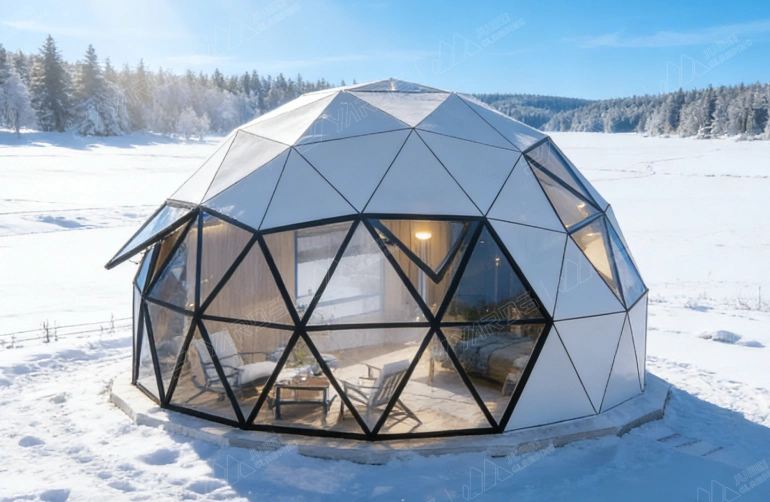
The geodesic dome design is known for its structural strength and stability. The triangular framework distributes pressure evenly across the entire structure, allowing the dome to remain stable even under strong wind conditions. Compared with many traditional tents or lightweight structures, geodesic domes can handle higher wind loads because their shape reduces resistance and prevents concentrated stress on specific points.
Another advantage of geodesic dome glamping structures is their excellent wind resistance. The spherical shape allows wind to flow smoothly around the dome rather than hitting flat surfaces. This aerodynamic design helps reduce the impact of strong gusts, making the structure suitable for open environments such as mountains, deserts, coastal areas, and grasslands.
In colder climates, geodesic dome tents also provide effective insulation and heat retention. Many domes are built with durable PVC or insulated fabric covers that help block cold air from entering the interior space. Additional insulation layers, double-layer covers, and sealed windows can further improve thermal performance during winter conditions.
The dome shape itself also helps maintain interior warmth. Because the structure has fewer corners and more evenly distributed space, heat can circulate more efficiently inside the dome, helping maintain a comfortable indoor temperature when heating systems are used.
For resorts located in snowy regions, geodesic dome structures also offer good snow load capacity. The curved surface allows snow to slide off more easily, preventing excessive accumulation that could damage the structure.
Overall, Geodesic Dome Glamping structures combine strong engineering design with practical weather resistance. Their ability to handle wind, cold temperatures, and snow makes them a reliable and comfortable accommodation option for outdoor tourism projects in various climates.