
The geodesic dome glamping tent has become a popular choice for luxury camping projects thanks to its strong structural stability, wide interior space, and eye-catching design. However, to ensure long-lasting performance and safety, it is important to understand the environmental requirements of dome tents and the main factors developers should pay attention to before installation.
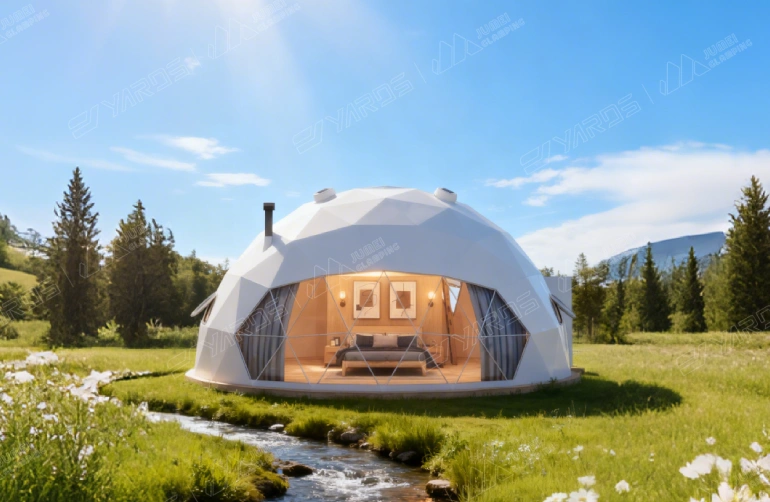
Environmental Requirements for Geodesic Dome Glamping Tents
Stable and suitable terrain
Although geodesic domes can adapt to various natural landscapes, the installation site should be relatively stable and level. Flat ground, reinforced soil, wooden decks, and concrete bases are all suitable. Avoid soft, overly sandy, or unstable slopes unless reinforced.
Adequate drainage conditions
Good drainage is essential. The site should not accumulate water after rain. Slightly elevated platforms, drainage channels, and leveled foundations help prevent moisture damage and extend the lifespan of the dome.
Climate-appropriate engineering
Different regions require different structural enhancements:
– Cold & snow regions: strengthened frames, snow-load calculations, and insulation layers.
– Windy coastal areas: upgraded anchors, thicker steel tubes, and reinforced connectors.
– Hot desert climates: UV-resistant fabrics, ventilation systems, and heat-insulating covers.
– Humid tropical zones: anti-mold materials and additional ventilation.
Key Safety and Performance Considerations
Wind and snow load assessment
The geodesic dome is known for its high wind resistance due to the triangular structure, but verifying local wind/snow conditions is essential. Choosing a dome that matches local engineering requirements improves safety and durability.
Ventilation and condensation control
Because domes are enclosed spaces, proper airflow is important. Installing operable windows, top vents, or fresh-air systems helps prevent condensation and improves comfort in both hot and cold climates.
Anchoring method
The anchoring system should match the environment:
– Ground screws for soil
– Heavy-duty bolts for concrete bases
– Steel brackets for elevated decks
A secure anchoring method ensures stability during strong winds.
Thermal insulation and shading
In regions with extreme temperatures, insulation, shading tarps, sunshades, or inner linings help maintain indoor comfort. Transparent windows should be paired with curtains or shading films to control heat gain.
Fire safety and materials
Choose dome tents made with flame-retardant fabrics and certified steel. Install proper fire safety equipment if the dome includes heating stoves or electrical appliances.
Conclusion
A geodesic dome glamping tent can perform well in many environments, from mountains and forests to deserts and coastal areas, as long as the site conditions and climate factors are carefully considered. Ensuring proper terrain preparation, anchoring, ventilation, and climate-specific engineering helps maximize safety, comfort, and long-term project value.